

Simple changes, thoughtful products and everyday habits for caring for our pets while treading a little more lightly on the planet.
Our pets have a way of making everyday life revolve around them. The morning walk, the carefully timed dinner, the favorite toy that apparently needs throwing one more time.
Caring for them also means a steady stream of purchases: food, treats, toys, beds, grooming products and those ever-present waste bags.
Each comes with choices about ingredients, materials, packaging and what happens when we’re finished with it.
The encouraging part?
Greener pet care doesn’t require a complete household makeover. Some of the simplest changes start with what we already own, how we shop and the routines we repeat every day.
At Seeing Green, we’re interested in practical ways to care for the animals we love while being more thoughtful about the resources that care requires. Here’s where to start.
Why Pet Care Matters for the Planet
The environmental footprint of pet care reaches well beyond the occasional destroyed squeaky toy.
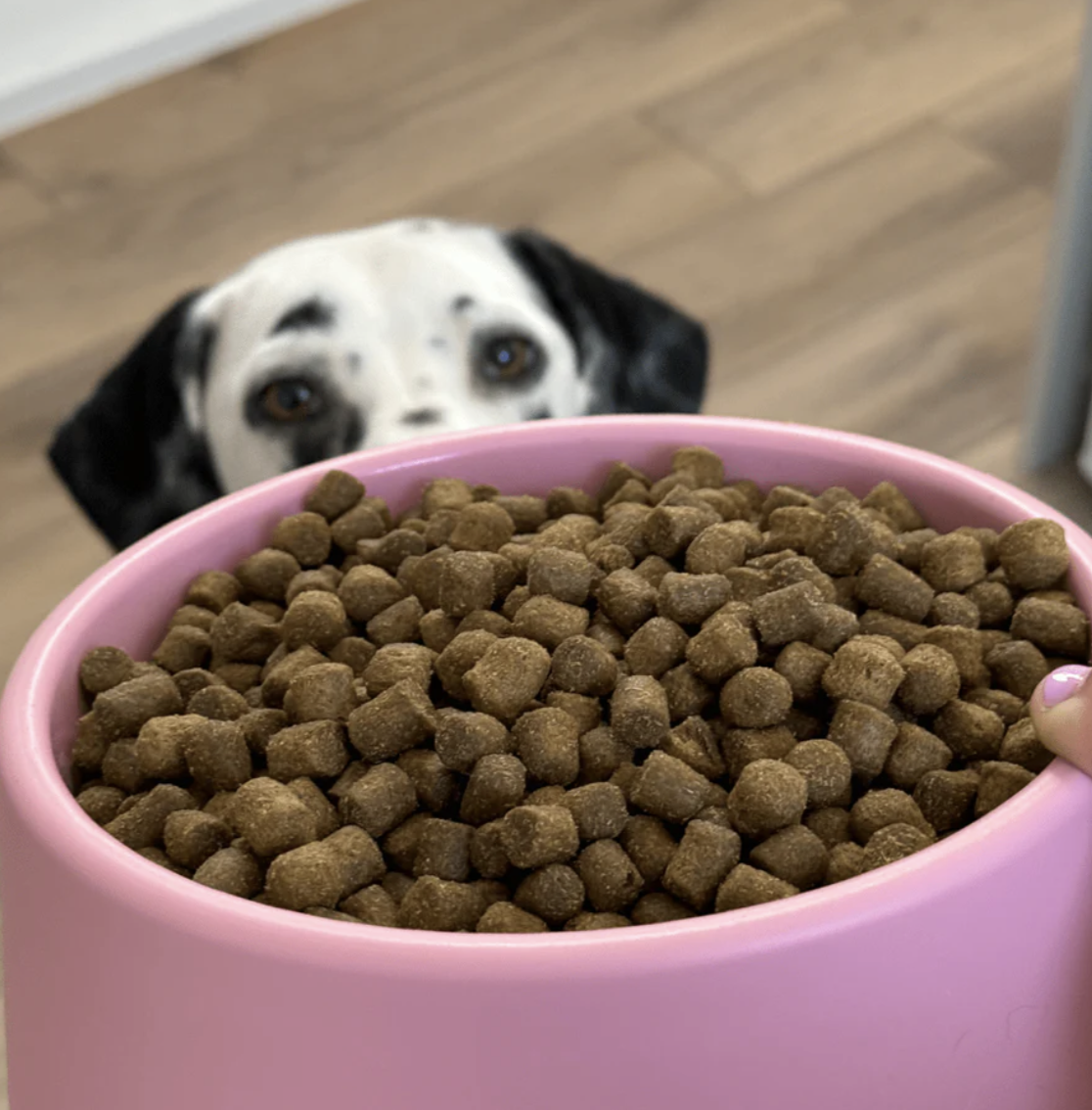
Photo: Beco Pets
Food is an important part of the picture. Producing ingredients requires land, water and energy. The types of ingredients used, how they’re sourced and how food is manufactured and transported all influence its footprint. Uneaten food adds another layer of waste.
Then there’s the packaging. Food and treat bags often combine materials to protect their contents, making them difficult to recycle through ordinary household programs. Grooming bottles, treat tubs and delivery packaging add to the flow.

Photo: Play Pet Brands
Toys, beds and accessories have their own material demands. Plastic, fabric, rubber and foam take resources to produce. When products wear out quickly or can’t be repaired, a familiar cycle follows: buy, use, discard, replace.
And there’s the unavoidable business of cleaning up. Waste bags and cat litter are recurring purchases, while pet waste itself needs responsible disposal to protect shared spaces and waterways.
These are all opportunities to make more thoughtful choices. A bed with a washable, replaceable cover, food stored properly or a toy that stays in use longer can improve a routine without making it more complicated.
What We Look for in Greener Pet Care Solutions
A useful pet product needs to work for the animal who uses it and the person caring for them. From there, we look at how it’s made, how long it might last and what happens afterward.

Photo: BrewBix
Nutrition and suitability first. Food should meet the needs of the particular pet, including their species, life stage and individual health requirements. For everyday meals, a complete-and-balanced nutritional adequacy statement is more useful than broad marketing terms such as “premium” or “natural.” FDA explains what that statement means.
Thoughtful ingredients and sourcing. Clear information about where ingredients come from, how they’re produced and whether a company makes useful use of existing resources. Depending on the product, that might include upcycled ingredients, alternative proteins or specific animal-welfare and sourcing standards.

Photo: West Paw
Durability and easy care. Toys suited to a pet’s play style, washable bedding, sturdy stitching and parts that can be replaced separately. Something that lasts through repeated use can be a better purchase than a cheaper item that needs replacing frequently.
Considered materials. Recycled content, responsibly sourced fibers and clear explanations of what a product contains. The material choice should make sense for its job, including comfort, cleaning and durability.
Less packaging—and a realistic plan for it. Reduced packaging, refill options and take-back programs can be useful. So can clear instructions that distinguish household recycling from a special collection program.
Claims we can understand. Specific details are more helpful than a leaf on a label. What is recycled? Which part is compostable? Where can it actually go? Good information helps us choose something that fits our household and local services.
Simple Ways to Green Your Pet Care Routine
1. Start with What Your Pet Already Has
Before adding anything to the shopping cart, take a look around.

Photo: Molly Mutt
A small rotation of existing toys can bring forgotten favorites back into play. A washable bed cover may need cleaning rather than replacing. A worn cover might be replaceable without buying an entirely new bed.
For bedding designed to be filled with household textiles, old towels and blankets can find another use.
Check condition as you go. Products that are damaged or no longer safe have reached a different point in their useful lives.
The goal is to get more use from the things that still do their job. Your dog probably doesn’t know last season’s toy is last season’s toy.
2. Take a Closer Look at Food and Treats
The food bowl is a good place to ask a few more questions.
Does the company explain its ingredient sourcing? Does it provide clear nutritional information? Are its environmental claims specific to the food you’re considering?

Photo: Jiminy’s
Some products use upcycled ingredients that put surplus food resources to work. Others explore plant-based recipes, insect proteins or different approaches to sourcing meat and seafood. These are avenues to investigate alongside nutritional suitability.
If you’re considering a substantial diet change, talk with your veterinarian about what makes sense for your pet.
There are useful changes you can make with the food you already buy, too. Follow storage instructions, keep track of what’s open and buy quantities you can use while fresh. A larger bag offers little advantage if a portion regularly goes uneaten.
3. Choose Toys and Gear for the Pet You Actually Have
An enthusiastic chewer, a gentle fetch enthusiast and a cat who prefers the cardboard box have different needs.
Matching a product to your pet’s size and behavior makes it more likely to earn its place at home. Look for clear guidance on intended use, durable construction and straightforward cleaning instructions.

Photo: Ruffwear
For beds and accessories, consider removable covers, available replacement parts and repair options. For toys, look for take-back programs that accept the particular material or product you’re buying.
It also helps to think beyond the initial purchase. Can you wash it easily? Replace the cover? Mend a seam safely? Return it when it wears out?
Those questions can turn “another pet purchase” into something that stays useful for years.
4. Make Grooming a Little More Thoughtful
Grooming products are another place to look at both the formula and the container.

Photo: Earthbath
Choose products intended for your pet’s species and needs, with clear ingredient and usage information. A “natural” label alone doesn’t tell you whether something is appropriate for your animal.
When comparing suitable options, consider concentrated formats, refills or bottles made with recycled plastic. Choose a size you’re likely to finish, and follow dilution and dosing instructions so the product goes as far as intended.
Washable grooming cloths and towels can also earn their keep across repeated baths and muddy walks.
And finish the bottle before opening the next one. Bathroom shelves can become crowded surprisingly quickly—even when they belong to the dog.
5. Give Waste Bags a Reality Check
Picking up after our pets is part of looking after the places we share.
When choosing bags, start with reliable performance and the disposal route available where you live. Bags made with post-consumer recycled plastic can reduce demand for new plastic.
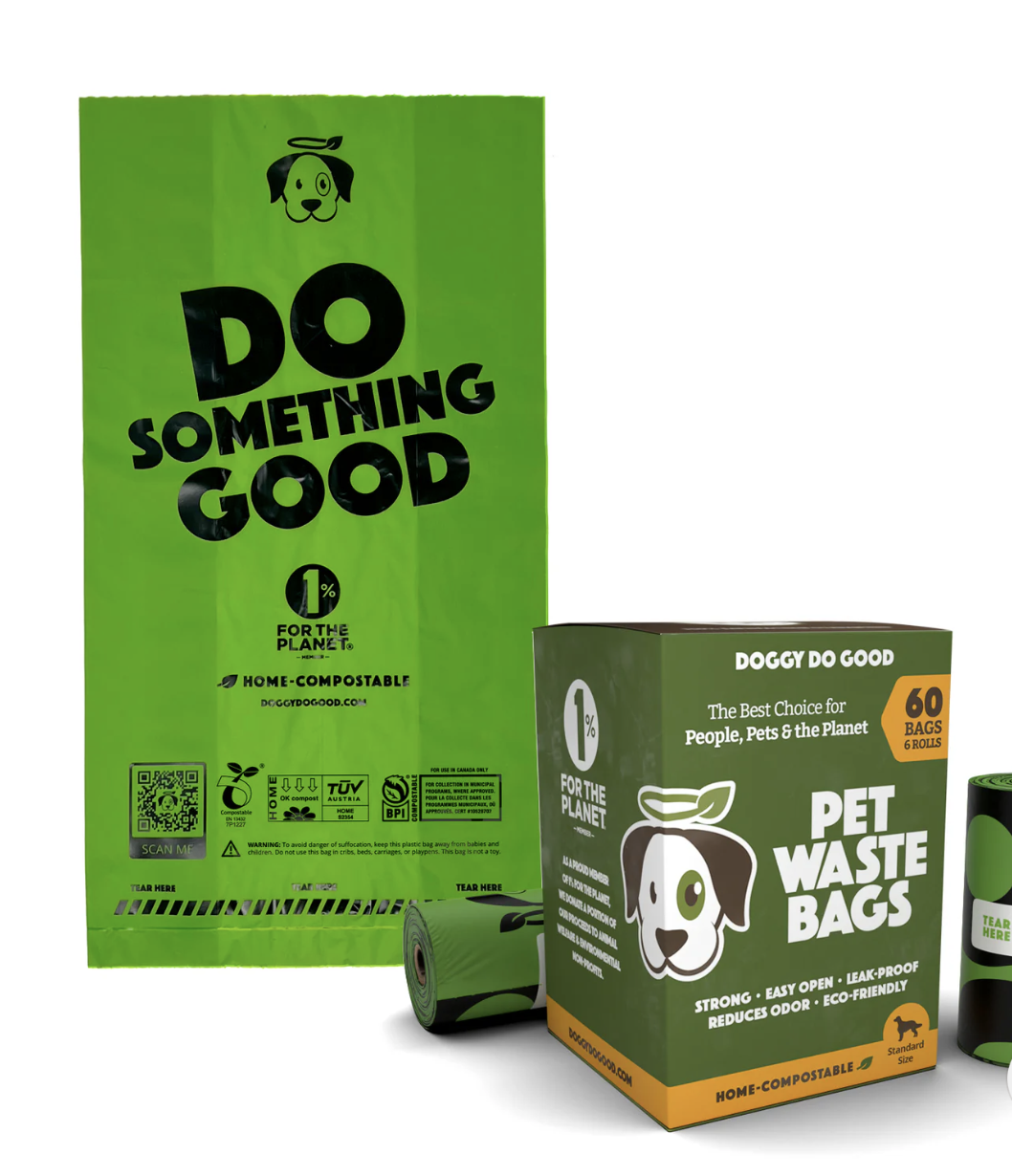
Compostable bags need a closer look. Certification describes how a bag breaks down under specified conditions; it doesn’t mean your local composting service accepts pet waste. Many services exclude it, and EPA advises keeping pet waste out of ordinary home compost. Check local rules before choosing a disposal method. EPA’s home-composting guidance
Choose bags that suit the job, carry them when you head out and put filled bags in the appropriate bin. Whatever the material, leaving a bag beside the trail is unfinished business.
6. Look Beyond Conventional Cat Litter
Cat litter is a regular purchase where the material itself deserves attention.
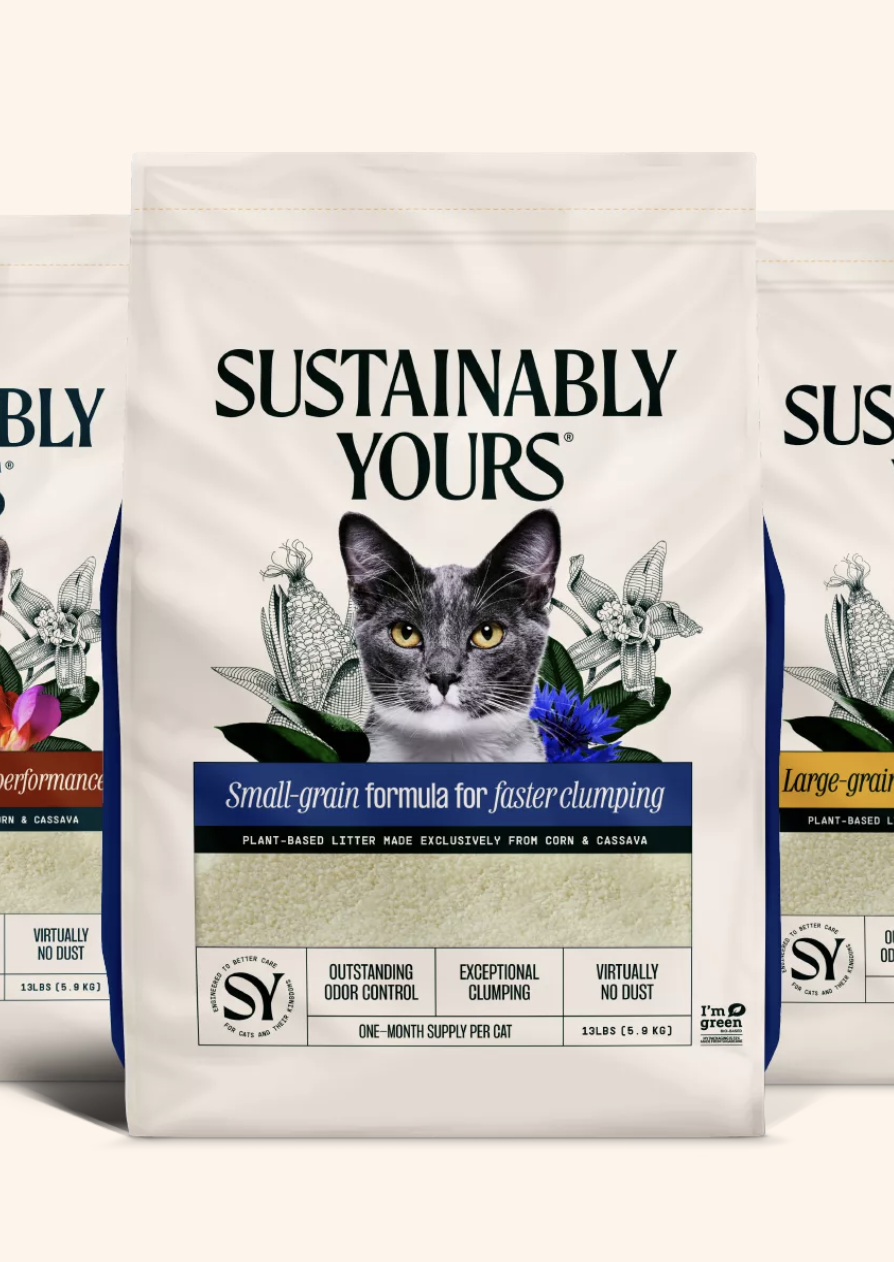
Photo: Sustainably Yours
Options include wood, paper, corn, wheat and walnut shells, offering alternatives to mined clay. Compare how they’re sourced, how much packaging they use and how well they perform in your home.
Practical details matter: dust, odor control, tracking, weight and whether your cat will comfortably use it. A litter that creates excessive mess or goes unused is unlikely to become a lasting improvement.
Follow disposal instructions and local requirements. Plant-based material doesn’t automatically make used litter suitable for composting or flushing.
The aim is a routine that works reliably for your cat while giving you more control over what you buy and throw away.
7. Make One Change Your New Routine
You don’t need to change the food, replace the bed, research every toy and solve the litter box all in one weekend.
Pick the next decision that naturally comes up.
When the bed cover wears out, look for a replacement. When the treats run low, investigate a thoughtfully sourced option. Before buying another toy, bring a forgotten favorite back into rotation.
Starting with one repeat purchase or habit gives you room to find out what works—for your budget, your household and your pet.
Over time, those decisions can become the familiar way you do things.
Small Changes, Repeated Often
Making pet care more sustainable doesn’t require replacing everything in the toy basket or changing your pet’s whole routine.

For some households, the starting point might be keeping a favorite bed in use with a replacement cover. For others, it could be wasting less food, choosing recycled-content waste bags or buying fewer toys that last longer.
What matters is that pet care is something we do every day. The meals, walks, playtime and cleanup give us regular opportunities to use resources more thoughtfully.
As more pet owners look for durable products, clearer sourcing information and practical ways to reduce waste, they also give companies more reason to improve what they offer.
Our pets don’t need a sustainability makeover. They need care, comfort and plenty of attention. We can give them all of that while being a little more thoughtful about what goes into the bowl, comes home from the shop and eventually goes into the bin.
Interested in learning more?